
Torrance County Criminal Court Records
A criminal court record is the court's file for a prosecution. In Torrance County, that file may begin with a complaint, information, indictment, citation, or lower-court filing, then grow as hearings, motions, plea papers, orders, disposition entries, sentencing, fines, bond conditions, probation conditions, and post-judgment events are added. The District Court Clerk keeps Torrance County District Court criminal case files, while Magistrate Court and municipal courts maintain records for cases filed at those levels.
Felony criminal cases and criminal appeals from lower courts are District Court matters in the Seventh Judicial District. Misdemeanors, DWI, traffic, and felony preliminary hearings may be heard in Moriarty Magistrate Court. Municipal courts in Estancia, Moriarty, and Mountainair handle city ordinance, petty misdemeanor, DWI, and city traffic matters. The charge-level allegations are treated in more detail on the arrest records and court charges page, while this criminal court records page focuses on the full court case file and outcome.
| Court | Criminal case role | Record path |
|---|---|---|
| Torrance County District Court | Felony cases and criminal appeals | Case Lookup, District Court Clerk, re:SearchNM, court IPRA |
| Moriarty Magistrate Court | Misdemeanors, DWI, traffic, felony preliminary hearings | Case Lookup, magistrate clerk, docket page |
| Municipal courts | City traffic, ordinance, petty misdemeanor, some DWI matters | City court contact and limited Case Lookup data |
Search Torrance County Criminal Records
The main public search route is New Mexico Case Lookup. It covers District, Magistrate, Metropolitan, Municipal, and appellate courts after the user accepts the official disclaimer. For Torrance County criminal court records, use defendant name, case number, DWI Search, court type, court location, filing date, hearing date, or date of birth filters when legally available. Public Case Lookup does not provide documents, and it does not display juvenile criminal cases, sealed records, expunged records, or protected personal identifiers.
- Open New Mexico Case Lookup and accept the judiciary disclaimer.
- Search by defendant name, full case number, or DWI Search when that path fits the case.
- Limit by District, Magistrate, or Municipal Court and select the Torrance County location that matches the paperwork.
- Review the docket, charges, court events, plea, disposition, sentence, and financial obligation fields that are visible.
- Request documents or certified copies through re:SearchNM, the court clerk, or New Mexico Courts IPRA when public lookup is not enough.
The New Mexico Courts expungement page is also important when a person is reviewing older Torrance County criminal court records that may qualify for restricted release after a court process.
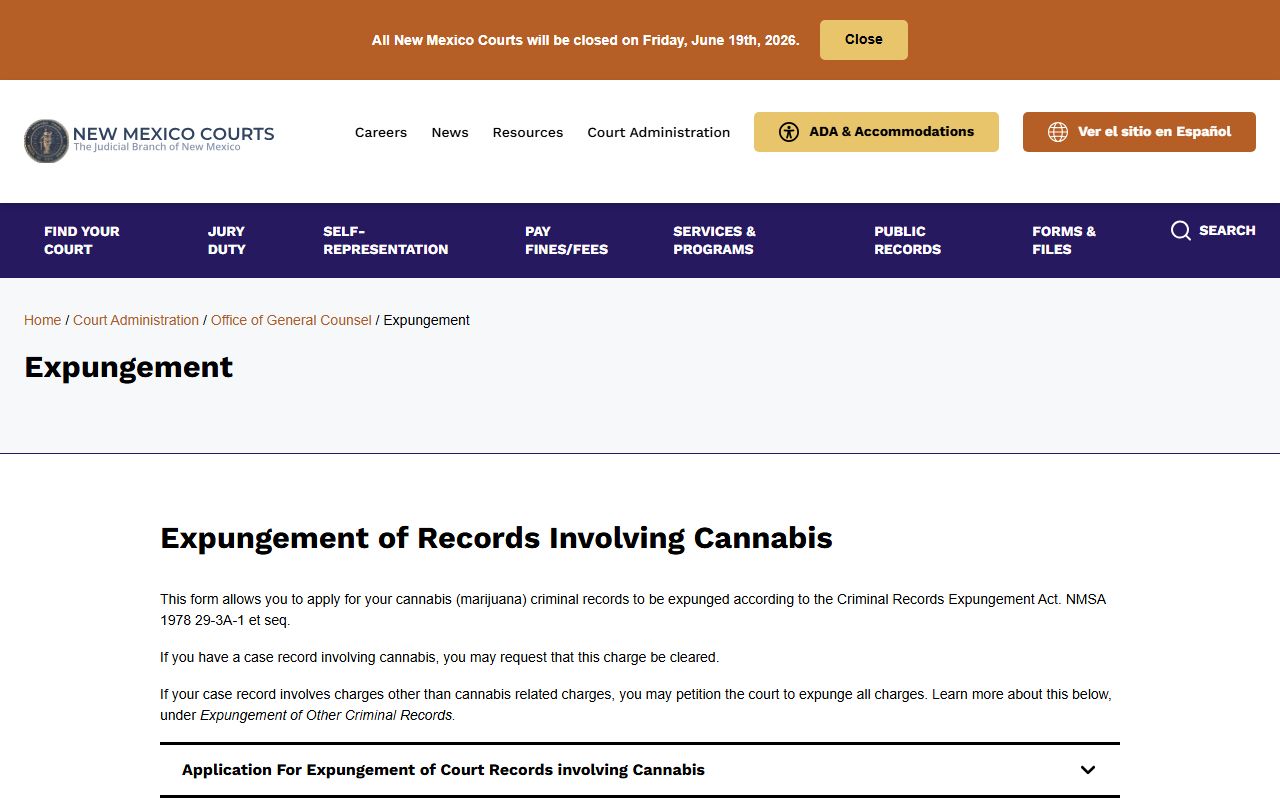
Expungement affects public release, but it does not turn a public search page into a complete criminal history check.
Torrance County Criminal Case Flow
A Torrance County criminal court record changes as the case moves. Early entries may show a complaint, citation, information, indictment, bond, or first appearance. Later entries may show arraignment, pretrial conferences, motions, plea settings, trial dates, disposition, sentencing, probation conditions, fines, fees, restitution, and warrant or compliance activity. The court record is broader than a single charge because it tracks what the court did with the prosecution.
Case flow: Charges Filed › Arraignment › Pretrial and Motions › Plea or Trial › Disposition › Sentencing
| Stage | What Happens |
|---|---|
| Charges filed | The prosecutor or charging authority files the allegations that open or advance the criminal case. |
| Arraignment | The defendant is advised of the charge and plea or status is addressed. |
| Pretrial and motions | The court handles bond, discovery, continuances, suppression issues, plea talks, and other requests. |
| Plea or trial | The case resolves by plea, dismissal, trial verdict, or other court-approved outcome. |
| Disposition | The court records the outcome for each count or case. |
| Sentencing | The judge orders jail, prison, probation, fines, fees, restitution, conditions, or other lawful terms. |
What Torrance County Criminal Records Show
Visible criminal case fields depend on court level and access tier. Case Lookup and docket sources can show public case information, while documents may require re:SearchNM, clerk inspection, or a court IPRA request. A Torrance County criminal court record may show charges that were later amended, reduced, dismissed, or resolved by plea. For that reason, the disposition and sentence fields are as important as the initial charge text.
| Field | What It Shows |
|---|---|
| Case number | The court identifier used to find the criminal case and request copies. |
| Defendant | The person charged in the case, subject to public-access and identity redaction rules. |
| Charges or counts | The filed allegations, including charge description, count, and possible statutory reference. |
| Court and location | District, Magistrate, or Municipal Court, with Estancia, Moriarty, or Mountainair context. |
| Bond or release status | Conditions, bond type, or hold information when shown in the case record. |
| Plea | The defendant's formal response, such as guilty or not guilty, when public. |
| Disposition | The outcome, such as conviction, dismissal, acquittal, or other court resolution. |
| Sentence | Jail, prison, probation, fines, fees, restitution, or court-ordered conditions. |
| Post-judgment activity | Warrants, probation issues, payments, appeals, or later compliance events. |
Torrance County Criminal Case Offices
The Seventh Judicial District Attorney prosecutes state criminal cases for Socorro, Torrance, Sierra, and Catron counties. The research file names Clint Wellborn as District Attorney and lists a Torrance County office at 903 N Fifth Street in Estancia with phone 505-384-2800. Prosecutors file and pursue charges after law-enforcement investigation or arrest, but the court remains the record custodian for the criminal case file. Prosecutor contact can help with victim-witness services or charging context, not certified court copies.
The Seventh Judicial District Attorney page identifies the prosecuting district that includes Torrance County.
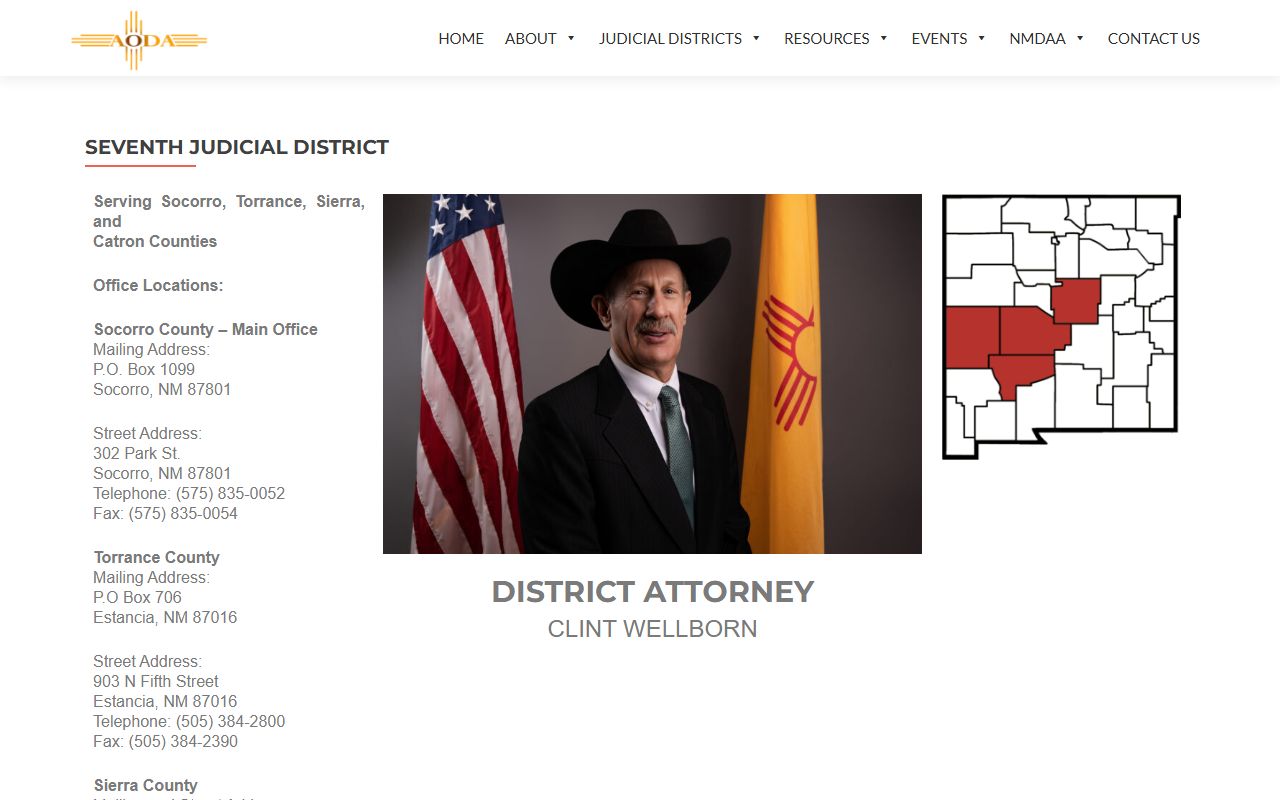
Use the prosecutor's office for prosecution-related questions, but use the court clerk for the official criminal court record.
The Seventh Judicial District Attorney staff page lists district staff, including prosecutors, victim advocate staff, and investigators.
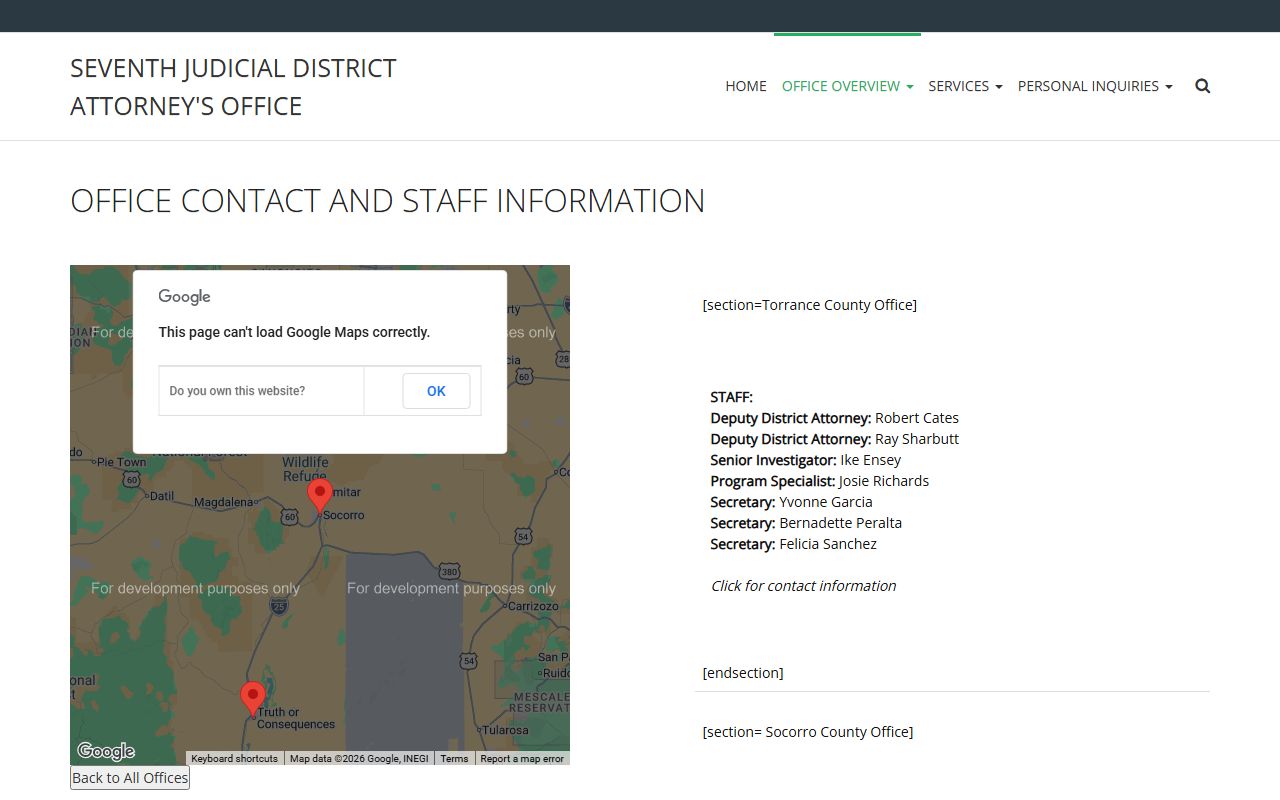
Staff listings can help identify the office, but they do not replace the court docket or certified case file.
Torrance County Criminal Charges vs Convictions
A charge is an allegation. A conviction is a final outcome based on a guilty plea, verdict, or other lawful finding. Torrance County criminal court records can show charges that never became convictions because they were dismissed, amended, reduced, or resolved in another way. A user reading criminal records should check every count, plea, disposition, and sentence before describing what happened.
| Point | Charge | Conviction |
|---|---|---|
| Meaning | A filed allegation in court | A guilty finding or plea accepted by the court |
| Record location | May appear in complaint, information, indictment, citation, or docket | Appears in disposition, judgment, sentence, or final case activity |
| Can change | May be amended, reduced, dismissed, or dropped | May later be appealed, set aside, sealed, or expunged if legally allowed |
| How to verify | Read the count and later docket history | Read the disposition and sentence for that count |
Note: Do not treat a filed charge as a conviction unless the court record shows a guilty outcome for that count.
Torrance County Criminal Defense Records
Criminal court records often contain defense filings, motions, plea documents, orders, and hearing entries. The New Mexico Law Offices of the Public Defender represents low-income people facing criminal charges in New Mexico. The research file did not confirm a Torrance-specific public defender office address, so the official LOPD source should be used to identify the correct office or intake path for a current case. Court records remain with the court even when a public defender or private attorney appears.
The New Mexico Law Offices of the Public Defender homepage is the official state source for public defense information.
Use LOPD for defense eligibility and representation questions, not as the custodian of court records.
The LOPD about page describes public-defense work in New Mexico, including lawyers and support staff.
For record copies, the court clerk or authorized court access system is still the correct channel.
Torrance County Sealed Criminal Records
Restricted criminal records include juvenile matters, sealed cases, expunged records, and filings with protected personal identifiers. New Mexico Judiciary no longer displays juvenile criminal cases in public Case Lookup, and juvenile sealing can be governed by Children's Code provisions. The Criminal Record Expungement Act creates a petition process for qualifying arrest and conviction records. If a court grants expungement, agencies and courts are generally restricted from releasing the records except as allowed by law or court order.
| Point | Sealed | Expunged |
|---|---|---|
| Public visibility | Hidden from ordinary public access by law or court order | Release is restricted after a qualifying court order |
| How it happens | Case type, statute, rule, or judge's order | Petition, required findings, service, and court order |
| Typical examples | Juvenile, sensitive family, mental-health, protected-identifier material | Qualifying arrest and conviction records under New Mexico law |
| Practical step | Ask the clerk about authorized-party or court-order access | Use New Mexico Courts and DPS expungement guidance with local court procedure |
Public Access to Torrance Criminal Records
Public access to Torrance County criminal court records is shaped by IPRA, court rules, Case Lookup limitations, and confidentiality statutes. The New Mexico Courts public-access material says Case Lookup is free and does not require registration, but documents are not available through that tool. re:SearchNM may provide access to Odyssey court records and documents for registered users by tier. For records not online or records before online coverage, use the court clerk or the New Mexico Courts IPRA form.
New Mexico Courts also states that the judiciary does not conduct criminal background checks for the public and does not maintain law-enforcement records, motor vehicle driving records, or marriage licenses. That matters in Torrance County because an arrest record, jail booking, driver's history, and court conviction are separate records. For all criminal case files, use the court that filed or heard the case. For custody status, use detention or inmate channels. For warrant status, verify with the issuing court or sheriff because online case data may not be real time.